Nature’s Rarest Coexistence
Deep in the southern tip of Florida, where sawgrass stretches toward the horizon and waterways carve mysterious paths through the wilderness, something extraordinary happens that practically nowhere else on Earth can claim. In the brackish waters of the Florida Everglades, two prehistoric powerhouses of the reptile world—the American alligator and the American crocodile—actually share the same ecosystem. This is not just a curiosity of wildlife geography; it’s a genuine ecological anomaly that has fascinated researchers and drawn curious visitors to the Sunshine State for decades.
Understanding the Distinction: More Than Just a Smile
Before diving into the remarkable coexistence that occurs in South Florida, it’s worth understanding what sets these magnificent creatures apart. At first glance, an alligator and a crocodile might seem like variations of the same animal, but anyone who has spent time with both can tell you they are distinctly different beasts, each adapted to its own corner of the world.
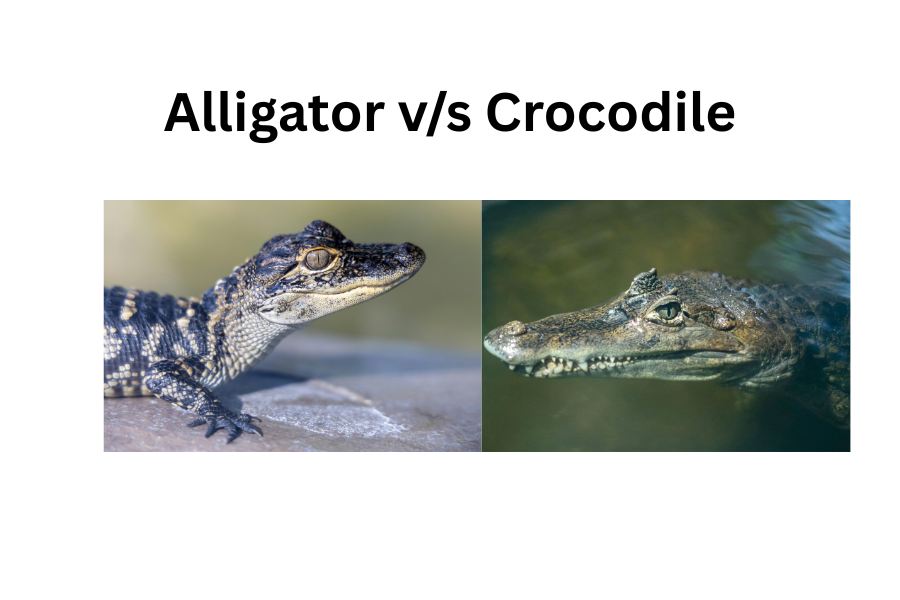
The American alligator, with its broad, rounded snout, has become an iconic symbol of the American Southeast. That characteristic “U” shaped jawline gives alligators a somewhat docile appearance when their mouths are closed, though anyone who has seen one gape knows the impressive dental display that lurks inside. Alligators thrive in freshwater environments—lakes, rivers, swamps, and marshes—and they have carved out a dominant presence throughout the Everglades and across much of the Gulf Coast.
The American crocodile, by contrast, possesses a longer, more tapered snout that reveals its teeth even when its jaw is firmly shut. That perpetually-toothy grin hints at something different: a creature more associated with saltwater and brackish environments. Crocodiles have special glands that allow them to process salt water, an adaptation that lets them roam coastal areas, mangrove swamps, and estuarine environments where fresh and salt water mix. Their historic range once stretched from the Everglades south through the Caribbean and across the Americas, but today, they cling to much smaller populations, with Florida representing their only stronghold in the United States.
A World Apart: Why Most Places See Only One or None
Across the globe, these two reptiles have developed a remarkable pattern of mutual exclusivity. You will not find alligators and crocodiles sharing territory anywhere in Africa, Asia, or Australia. Each continent that hosts one of these creatures typically hosts only one species, not both. This separation is not accidental—it reflects millions of years of evolutionary divergence, distinct habitat preferences, and behaviors that generally keep these reptiles out of each other’s way.
In Africa, crocodiles reign supreme in rivers and lakes, while alligators never established a presence on that continent. Southeast Asia hosts saltwater crocodiles and various freshwater crocodile species, but no native alligators. Australia similarly hosts crocodile species in its northern waters but no alligators. This pattern makes perfect sense when you consider the geological and ecological history of these continents. Alligators evolved primarily in North America and a small region of eastern Asia, while crocodiles spread more extensively through tropical regions worldwide.
The habitat preferences of each creature reinforce this separation. Alligators prefer the freshwater ecosystems that dominate much of the southeastern United States, while crocodiles have adapted to coastal and brackish environments wherever they are found. These different habitat choices mean that even in regions where both species might theoretically survive, they simply do not encounter each other frequently enough to compete directly or interact meaningfully.
South Florida: The Extraordinary Exception
Which brings us to the Florida Everglades, the remarkable place where all bets are off and these two ancient reptiles actually do share territory. This coexistence occurs because South Florida represents a unique convergence of geography, climate, and ecology that exists practically nowhere else on the planet.
The Everglades ecosystem itself is a transitional zone, where freshwater from the interior gradually gives way to brackish conditions as it approaches the coast. This creates a mosaic of habitats—freshwater marshes, mangrove forests, coastal estuaries, and everything in between—within a relatively small geographic area. Alligators dominate the freshwater portions of this ecosystem, building their famous nests in the sawgrass marshes and lounging in the sunny spots along the perimeter of the ‘glades. But as the water becomes increasingly saline near the coast, crocodiles take over, patrolling the mangrove tunnels and brackish bays that alligators generally avoid.
What makes this situation truly remarkable is that there is a substantial zone where these habitats overlap. In the estuarine areas where fresh and salt water mix, both species can be found, sometimes in remarkable proximity to one another. Researchers have documented alligators and crocodiles occupying the same bodies of water, basking on the same banks, and navigating the same waterways. This is not theoretical coexistence; it is actual, observable sharing of space that happens regularly throughout the Everglades region.
The reason this works, ecologists believe, lies in the subtle differences in how these predators use their environment. Alligators tend to be more tolerant of cooler temperatures and can survive farther inland, while crocodiles require warmer conditions and access to more saline waters. In the Everglades, where temperature gradients and salinity levels change gradually across the landscape, there is simply enough room and enough differentiated habitat for both species to find their preferred conditions without constant direct competition.
Why They Cannot Interbreed: The Genetics of Separation
Given that alligators and crocodiles can live in the same place and are closely related members of the same order, Crocodilia, a logical question emerges: could these two species interbreed? After all, we have seen hybridization occur between seemingly distant species in other animal groups. The answer, according to everything science has established, is a firm no—and the reasons for this separation are deeply embedded in the biology of these ancient reptiles.
While alligators and crocodiles share a common ancestor and belong to the same order, they diverged from each other tens of millions of years ago. Alligators and crocodiles represent two different families within Crocodilia, and this evolutionary distance has produced genetic incompatibilities that prevent successful interbreeding. Despite superficial similarities in their appearance and reproductive biology, the chromosomal structures and genetic programming of alligators and crocodiles are fundamentally different in ways that make hybrid offspring biologically impossible.
Attempts to force such pairings in captivity have uniformly failed, and there is no credible scientific evidence of natural hybridization occurring anywhere in the wild. This reproductive isolation is actually quite common among species that diverged long ago—even if they remain physically capable of mating, the genetic instructions for creating a viable hybrid embryo simply do not exist. Think of it like trying to assemble furniture from two different manufacturers with incompatible parts; the basic pieces might look similar, but nothing actually fits together the way it should.
This inability to interbreed is good news for conservation efforts in the Everglades. It means that these two species maintain their genetic distinctiveness even when they share territory. There is no risk of diluting the gene pool or creating hybrid populations that might be less adapted to their respective niches. Each species continues to evolve along its own trajectory, preserving the unique characteristics that make alligators and crocodiles separate and valuable components of the Everglades ecosystem.
Conservation Implications and the Value of Coexistence
The fact that alligators and crocodiles share the Everglades has significant implications for conservation and wildlife management. Both species face threats from habitat loss, human conflict, and climate change, and understanding how they interact—or rather, how they successfully avoid interacting—is crucial for protecting both populations into the future.
American alligators have proven remarkably resilient despite centuries of hunting pressure and habitat destruction. Their numbers have recovered significantly since protective measures were implemented in the 1960s, and they currently occupy a healthy portion of their historic range throughout the Southeast. In the Everglades, alligators remain a keystone species, playing crucial roles in shaping the ecosystem through their nest-building activities, predator-prey relationships, and even the holes they create in the dry season that provide refuge for other animals.
American crocodiles tell a different story. Their population has never recovered to historic levels, and they remain listed as endangered in the United States. The Everglades population represents the northernmost extension of their range and is considered vulnerable to cold snaps, habitat fragmentation, and the various stresses of living in close proximity to a growing human population. Having alligators as neighbors probably does not help crocodiles much, but it does not appear to actively harm them either, which is perhaps the best outcome realistic conservationists can hope for when two apex predators share space.
The coexistence of these two species in the Everglades also makes the ecosystem a uniquely valuable location for scientific research. Understanding how alligators and crocodiers partition resources, avoid competition, and share territory provides insights into community ecology that simply cannot be gained elsewhere. Every crocodile spotted in the Miami area, every alligator observed in the Ten Thousand Islands, contributes to our understanding of how these ancient reptiles have solved—or failed to solve—the challenges of living together.
A Living Laboratory ofPrehistoric Proportions
There is something almost surreal about watching an alligator glide through the waters of the Everglades while knowing that somewhere not too far away, a crocodile is doing the same thing in waters that are just a bit saltier. These living fossils, survivors of the dinosaur age, have somehow found a way to share a corner of the modern world that should not logically accommodate them both.
The Florida Everglades stands as a testament to the complexity and adaptability of nature. Here, in this strange and beautiful place where fresh water gradually yields to the sea, two lines of evolutionary history that diverged millions of years ago have found a way to coexist. They cannot interbreed, they probably do not interact directly very often, and they certainly do not seem to enjoy each other’s company—but they share the same ecosystem, hunt the same waters, and have somehow made peace with sharing the stage.
For visitors to South Florida, this represents a rare opportunity to observe something that essentially exists nowhere else on Earth. A trip to the Everglades might reasonably yield sightings of both alligators and crocodiles in a single day, a wildlife experience that simply cannot be replicated in any other American ecosystem. For scientists, the Everglades offers a living laboratory where fundamental questions about predator coexistence, resource partitioning, and evolutionary biology can be studied in real time with living specimens of two remarkable species.
As we face an uncertain future of climate change, sea-level rise, and continued development pressure on South Florida’s habitats, the preservation of this unique ecological arrangement takes on added urgency. The alligators and crocodiles of the Everglades have survived mass extinctions, ice ages, and countless changes to their world. Whether they can survive the challenges of the twenty-first century while maintaining their remarkable coexistence remains to be seen—but for now, at least, they continue to share those waters in a way that truly makes the Everglades one of the wildlife wonders of the world.